
Know the calendar
Hail season in Stillwater runs March through July and peaks in April, May and June. NOAA radar data shows 136 radar detected hail days in the area between 2007 and 2026, so this is a regular event, not a rare one.
May has historically produced the most damaging large hail, which makes late spring the right time to know the condition of your roof.
What to look for from the ground
Walk the perimeter after a storm and check the places hail leaves evidence behind. Stay off the roof itself, since wet shingles are slippery and damage can hide soft spots.
- Dented gutters, downspouts and vents
- Granules collected at downspout outlets
- Dings on mailboxes, grills or window screens
- Cracked or torn siding and window trim
Document before you call
Take dated photos of anything you find, including the surrounding yard and any debris. If your insurance company will be involved, clear documentation makes the conversation smoother, though the final decision on coverage is always theirs.
Get a professional inspection
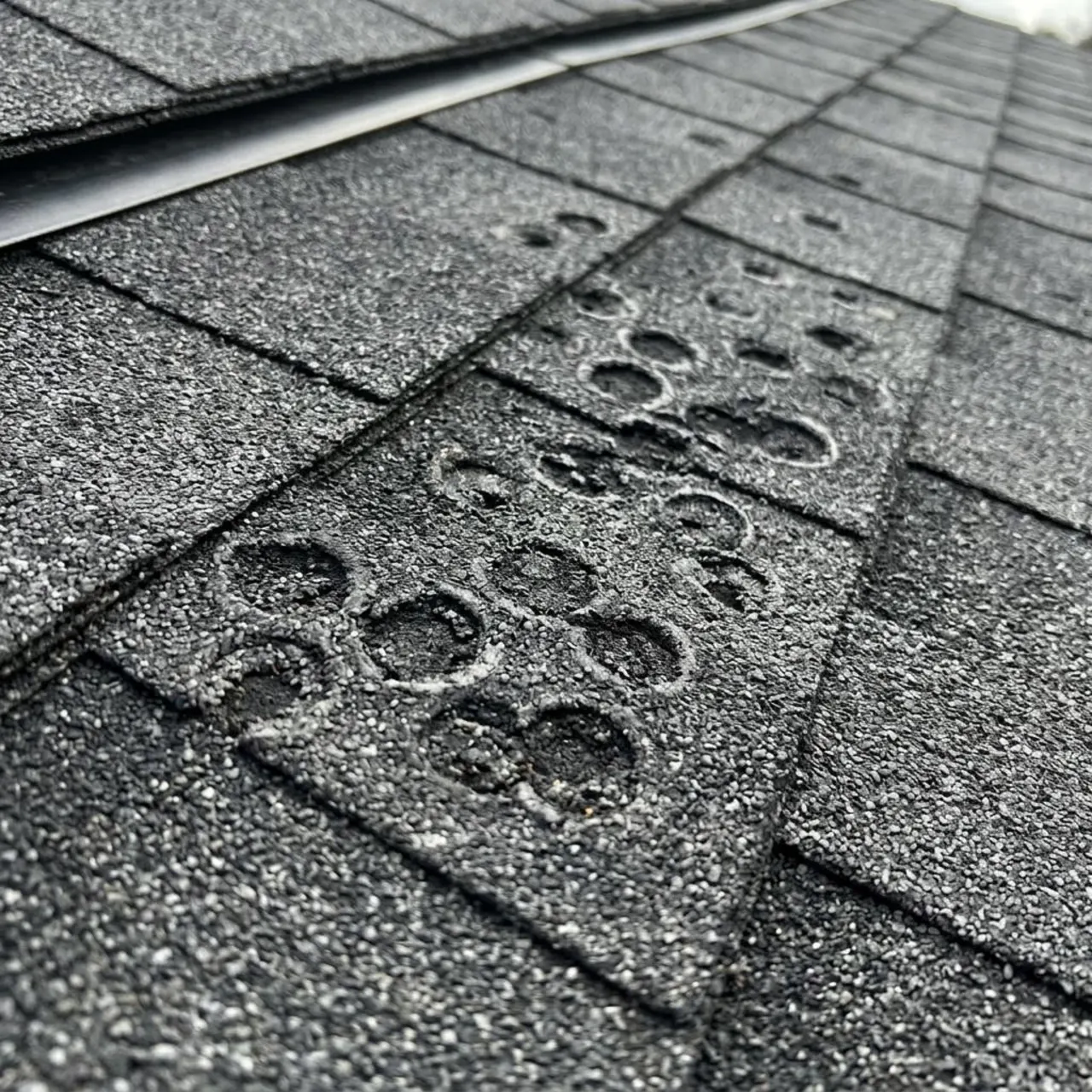
Bruising on shingles is often invisible from below, and a small hit can shorten a roof's life without causing an immediate leak. An inspection tells you whether you need a repair, a replacement or simply peace of mind. Ask for photographs of suspected impacts and an explanation of how the findings differ from ordinary aging or surface dirt.