
Know the season
Storm Events data shows hail in Enid peaks from April through June, and May tends to bring the most damaging large events. Storm reports show 96 hail reports within 10 miles of the city center since 2004, with the largest at 2.50 inches. Getting ready before spring is easier than reacting after a storm.
Before the storms arrive
Walk the property in March and note anything loose. Small problems become big ones when hail and wind hit a weak spot.
- Check for lifted, cracked or missing shingles
- Clear gutters and downspouts of debris
- Look at flashing around vents and chimneys
- Trim branches that hang over the roof
- Take dated photos of the roof for your records
What counts as damaging hail
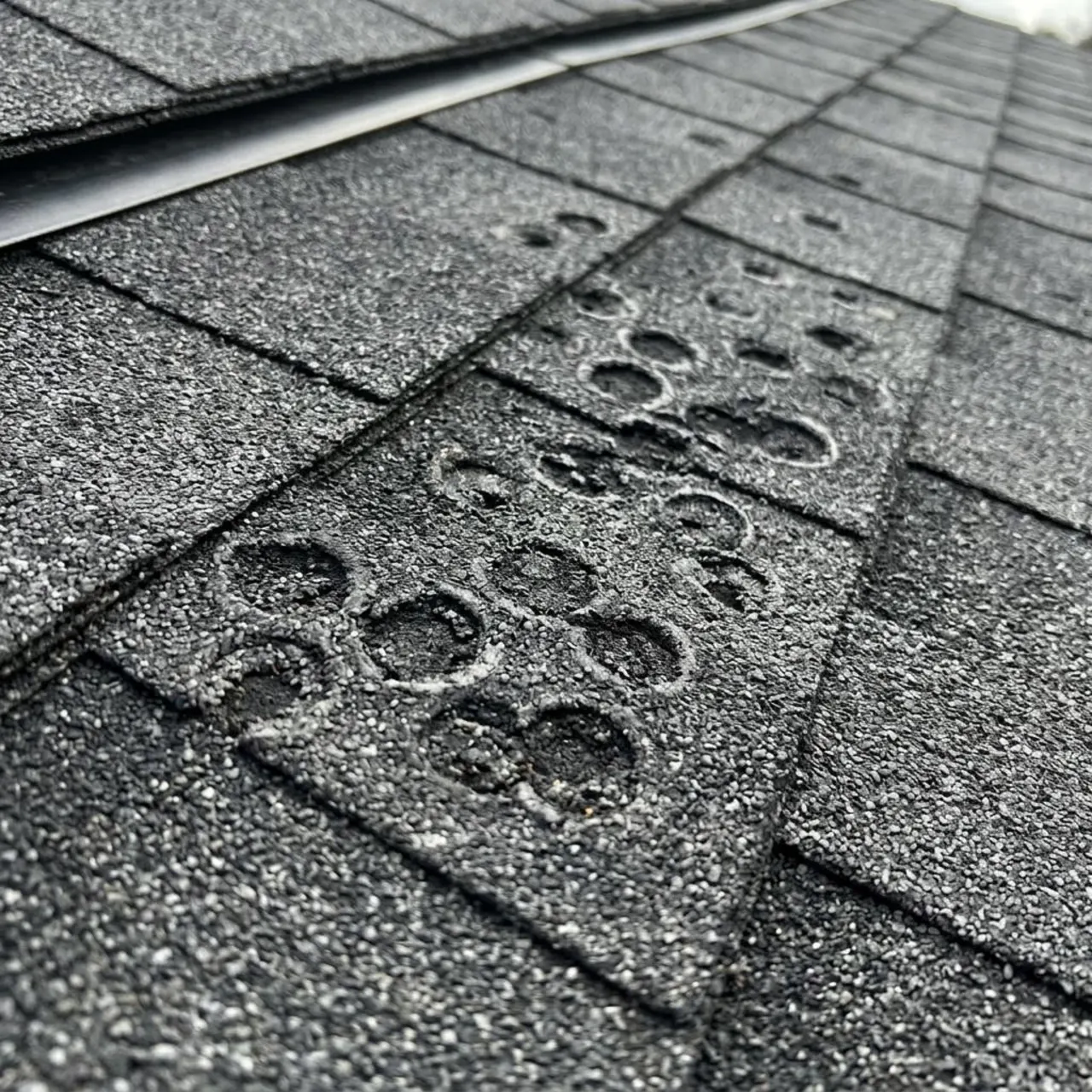
Of 162 recorded events in the Enid area, 62 reached 1.5 inches or larger, which is the threshold for likely functional damage to standard asphalt shingles. Smaller stones can still loosen granules over time, so do not assume a minor storm did nothing.
After a storm passes
Once it is safe, check for dented metal, bruised shingles and granules in the gutters. Photograph anything you find, then arrange a professional inspection. If you plan to contact your insurance company, early documentation helps keep the process organized.